

Preserving Your Child’s Distance Vision
According to the Canadian Association of Optometrists, myopia is steadily increasing in prevalence. This condition is the most common eye condition in the world and is the leading source of childhood vision problems.
As of right now, there is no way to stop myopia from developing. We can, however, slow its progression down. Through myopia control, you can prevent your child from needing new a prescription each year and reduce the strength of their prescription in adulthood.
Request an appointment to discover if myopia control will work for your child.
What Is Myopia?
Myopia control is a process designed to slow the progression of myopia as your child ages. The ultimate goal is to help your child get to adulthood with the lowest eyewear prescription possible.
There are several methods of myopia control available. Most methods rely on eyeglasses or contact lenses to correct nearsightedness on a daily basis and limit eye growth to prevent as much myopia progression as possible.
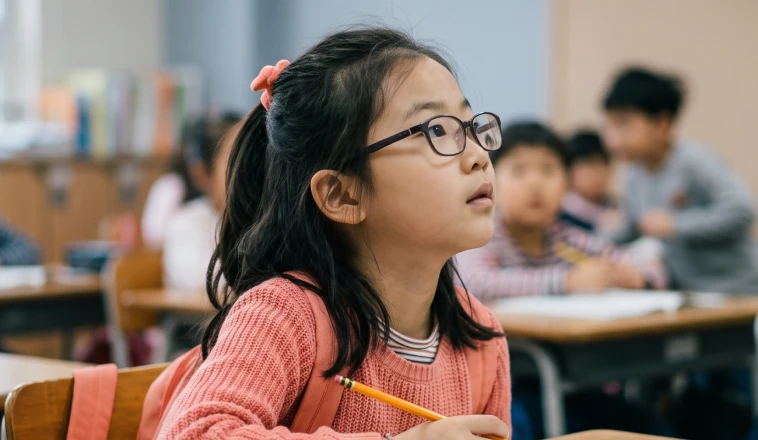
Signs of Myopia in Kids
Children often assume everyone sees the world exactly as they do, which means they may not express problems with their vision. Parents can watch for some common signs that may indicate a child is struggling with nearsightedness, including:
- Squinting or closing one eye to view distant objects
- Sitting close to the television, tablets, or computer screens
- Holding books, phones, or schoolwork very close to their face
- Complaining of frequent headaches or tired eyes after school
- Rubbing their eyes repeatedly during or after visual tasks
- Short attention span or a sudden drop in academic or athletic performance
Why Does Myopia Control Matter?
Myopia control aims to slow the progression of nearsightedness and stabilize the child’s prescription at a lower level. Because high myopia carries risks of serious, vision-threatening eye conditions like glaucoma, cataracts, and retinal detachment, stabilizing eye growth can help to reduce these risks.
Myopia control is most effective when started as early as possible. Myopia control treatments cannot reverse changes caused by myopia, so prevention is the goal. By starting myopia control once myopia is detected, we can provide the greatest opportunity to support your child’s long-term eye health.
Our Methods of Myopia Control
We offer several options for myopia control, depending on whether your child is ready for contact lenses, prefers glasses, or needs a combination treatment.
We will determine the treatment method that works for your child. As their treatment progresses, we will monitor their eye growth, any changes to their prescription, and update the methods we use as needed to suit your child’s needs.
MiSight single-vision contact lenses use a principle called myopic defocus to essentially pause the growth of the eyeball.
Recent studies indicate that peripheral vision may play an important role in directing the growth of the eyeball. It seems that many children with myopia also have something called hyperopic defocus. Their peripheral vision focuses at a point just behind their retina rather than directly on it.
The eye tries to accommodate for this issue by growing longer, giving the peripheral vision more space to focus correctly. Unfortunately, this makes the nearsightedness worse in the child’s central vision.
MiSight lenses refract the light, so peripheral vision focuses at a point in front of the retina. The eye then slows down growth significantly to avoid making the peripheral defocus any worse, which in turn prevents the central vision from getting significantly more severe.
Multifocal lenses offer several different corrective powers in one lens. The different levels of magnification are usually arranged in a sort of gradient, allowing the child to see clearly at every distance.
This lens design can cut down on strain, allowing children to see both what’s written on the whiteboard and what’s written in their books. Multifocal lenses may also eliminate hyperopic defocus or create myopic defocus, which can slow the progression of myopia.
Multifocal lenses are available as spectacle lenses and contact lenses. Both can help reduce myopia progression, although spectacles are not as effective as contact lenses.
Low-dose atropine eye drops are prescription drops administered once daily at bedtime to help slow down eye elongation. Unlike higher concentrations, low-dose atropine manages prescription changes with minimal effects on pupil size or near focusing comfort.
Low-dose atropine can be prescribed as a standalone treatment or used in conjunction with optical methods, such as multifocal glasses or contact lenses, for a combined approach.
When Should Children Start Myopia Control?
Myopia control is most effective when it begins early, while a child’s eyes are still growing. If your child is having trouble seeing the board at school, squinting, sitting close to screens, or needing frequent prescription changes, it may be time to book a myopia control consultation.
At Brighton Eyecare, our optometrists can assess your child’s vision, review their eye health, and discuss options that may help manage nearsightedness over time. The right approach depends on your child’s age, prescription, lifestyle, and long-term vision needs.
Regular eye exams are also important for monitoring changes in your child’s vision and adjusting their care plan as needed.
Frequently Asked Questions About Myopia Control
If your child squints to see distant objects, holds devices close to their face, or requires stronger eyeglass prescriptions every year, they may benefit from active myopia management. Book an appointment with Brighton Eyecare to receive tailored advice and discuss myopia control options for your child.
No, myopia control treatments do not reverse existing nearsightedness, but they significantly slow down how fast your child’s prescription changes as their eyes grow. Book an appointment with our optometry team to receive tailored advice and discuss how early myopia control can safeguard your child’s vision.
Myopia control typically continues throughout childhood and adolescence until eye growth naturally stabilizes, usually around the late teens. Book an appointment at our clinic to receive tailored advice and discuss long-term myopia control strategies for your child.
Modern treatment options include specialized soft contact lenses, multifocal eyeglass lenses, and low-dose atropine eye drops. Book an appointment with Brighton Eyecare to receive tailored advice and discuss which myopia control option fits your child’s daily routine.
Slowing prescription changes during early childhood helps keep your child’s vision lower over time, which significantly reduces their risk of developing sight-threatening conditions like retinal detachment later in life. Book an appointment with our clinic to receive tailored advice and discuss proactive myopia control for your child.
Spending time outdoors in natural daylight has been shown to help slow down eye elongation and delay the onset of nearsightedness in growing children. To learn more about balancing lifestyle habits with clinical care, book an appointment with our clinic to receive tailored advice and discuss myopia control for your child.

Visit Our Location
Find us in Brighton Marketplace, near the Shoppers Drug Mart and the Pet Valu. There is plenty of parking available.
Our Address
Contact Information
- Phone: 306-978-2993
- Fax: 306-978-2990
- Email: becadmin@yxevision.ca
After Hours Emergencies: 306-371-9911
Hours of Operation
Check Out
Brighton Eyecare

See What Our Patients Are Saying
